
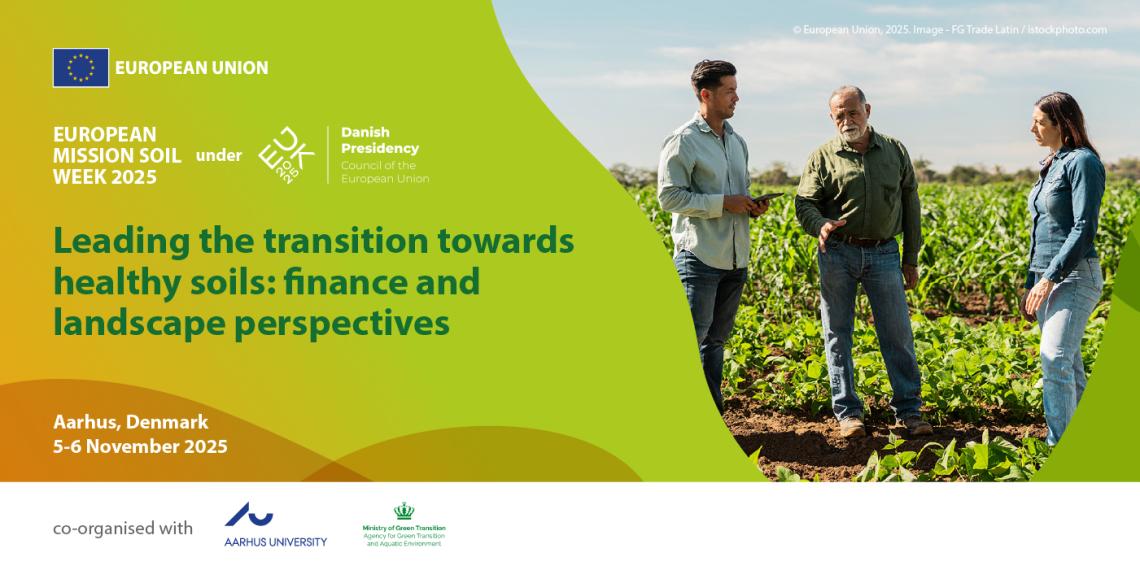
On the first day, as part of a packed programme focused on how to scale soil health through new business and investment models, the MRV4SOC project coordinator, Marta Gómez Giménez, presented the concept, implementation, and results obtained during the first phase of the project (2023-2024) during the Project trail session. The session was dedicated to promoting the Mission Soil by showcasing the progress of its funded projects across key thematic areas such as Carbon farming; and it was shared with the sister Horizon Europe projects MaRViC and CREDIBLE.
The feedback from the audience mainly revolved around the engagement of farmers in our analysis to ensure the implementation of fair solutions. To overcome these challenges, the MRV4SOC team has implemented a bottom-up approach to identify key processes and input data that must be considered when scaling up Tier-3 methodologies at larger scales. Especially, our analysis includes the assimilation of in-situ and remote sensing data into process-based models studying how cost-effective solutions impact models’ performance, opportunities, limitations, and the degree of reliability at different aggregation levels under different pedoclimatic conditions.
The lessons learnt will be useful to understand the strengths and weaknesses of MRV Tier-3 systems towards the establishment of a Voluntary Carbon Market. In addition, the engagement of local farmers have been accomplished through five workshops organised in Belgium, Italy, Czech Republic, and Spain to identify Carbon farming barriers and enablers in different ecosystems under traditional management practices and carbon farming conditions.
Discover the full presentation here.
To stay updated subscribe to our newsletter.