
PEATLANDS, PALUDICULTURE & WETLANDS

In these areas, land is seasonally or permanently covered by water, be it salty, fresh, or brackish. In peatlands, the waterlogged condition prevents vegetable material from fully decomposing. Paludiculture is a farming practice that exploits the advantages of some kinds of crops under wetland conditions.

DEpaludic13-1 – Bargischow, Western Pomerania, DE
This demo site is a currently drained peatland used as grassland and cut three times per year. In 2022 plans started to turn it into a paludiculture site. Paludiculture is productive land use of wet peatlands so that the peat is saved and not further decomposed. Paludiculture may, thus, help stop subsidence and minimise greenhouse gas emissions. The research at this site focuses on practical knowledge of rewetting and establishing paludiculture, and on greenhouse gas flux and biodiversity data collection.

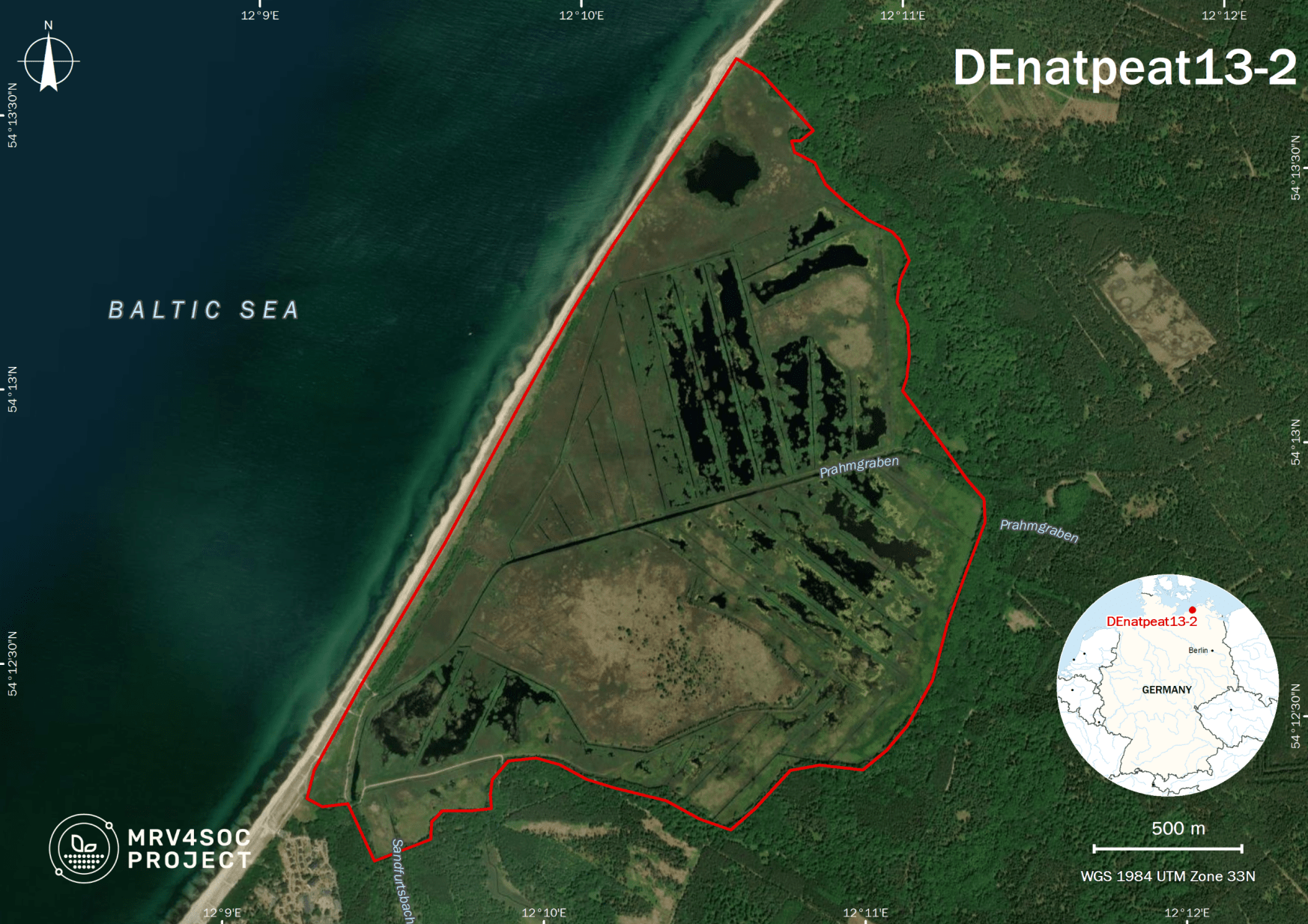
DEnatpeat13-2 – Heiligensee, Hutelmoor NR, Mecklenburg, DE
The territory belonging to this demo site is not currently used for human activities. It is a rewetted coastal peatland with water levels above ground surface for most of the year in most years (but 2018 major areas fell dry for the first time since rewetting in late 2009). This site is part of a long-term research network and provides valuable data to increase the robustness of standards for voluntary carbon markets. Available environmental data for this demo site on climatic events such as drought periods and storm surges is helping better understand the impact of climate change on soil organic carbon dynamics.
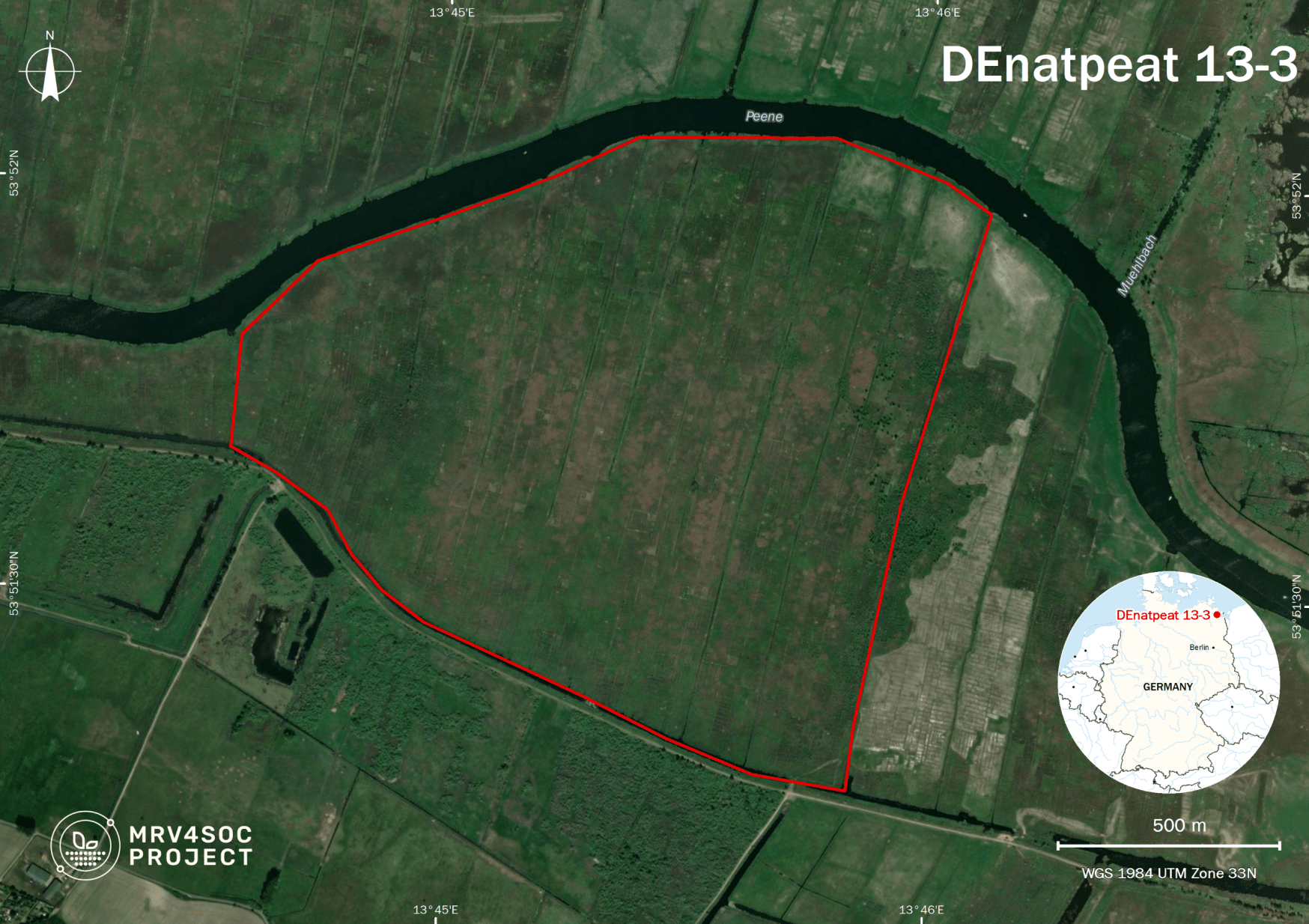
DEnatpeat13-3 – Ferne Wiesen, Western Pomerania, DE
The research site, part of the www.moorflux.net network, is a near-natural percolation fen (peatland) with water levels close to the ground surface, influenced by fluctuations in the nearby Peene River. Established in 2020 during the WETSCAPES project, this site aims to provide in situ ecosystem-scale measurements to verify the GEST approach for near-natural fen peatlands. These peatlands serve as valuable references for both drained and rewetted peatlands, though they remain under-researched due to the scarcity of pristine or near-pristine sites. The data gathered supports the development of a robust, transparent, and cost-effective EU MRV framework.
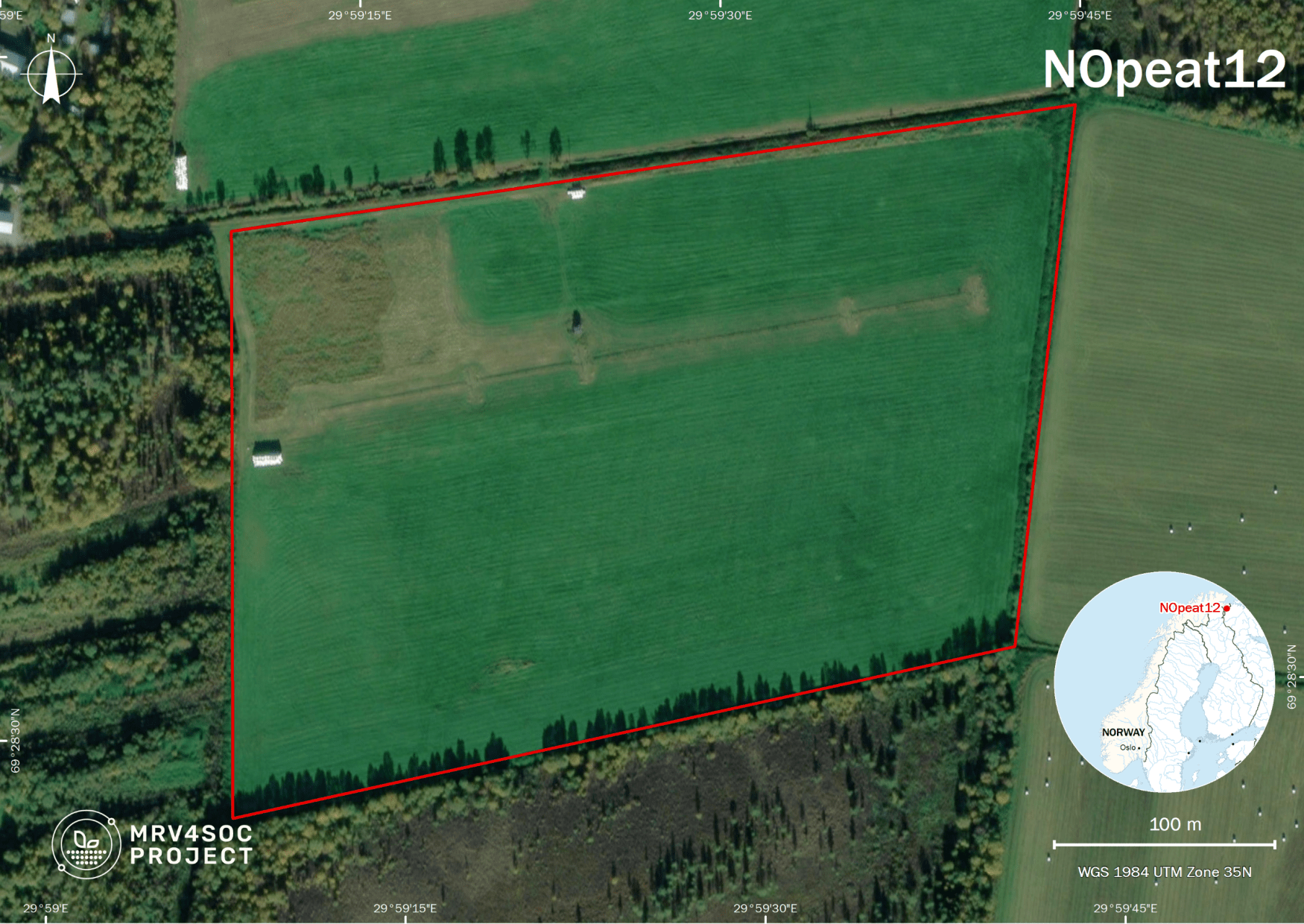
NOpeat12 – Svanhovd, Troms of Finnmark, NO
This demo site is a drained peatland with cultivated grass. The site has plots with high water level treatments to simulate a rewetting scenario and plots with different fertilisation treatments. The aim is to investigate changes in greenhouse gas fluxes and grass productivity in response to different management practices. It is established under the “MYR” project, which provides experimental evidence and model information to guide mitigation practices and help improve national greenhouse gas reporting.