
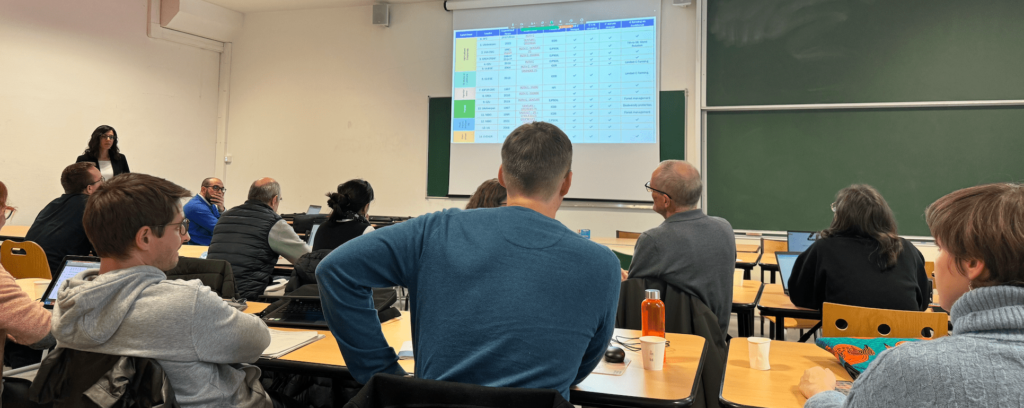
On November 4-5, 2024, the MRV4SOC Consortium gathered at the École Normale Supérieure in Paris, France, for a productive General Assembly. This assembly brought together 23 in-person attendees and additional online participants, representing 21 institutions, all dedicated to driving the project forward. Despite the complexity and challenges of building a comprehensive Monitoring, Reporting, and Verification (MRV) framework for the EU’s land sector, partners displayed a shared commitment to collaborative advancement.
Setting the Stage for Progress and Collaboration
MRV4SOC Project Coordinator Marta Gómez Giménez (GMV) opened the session with an overview of the project’s early achievements and a clear roadmap for upcoming milestones. Marta underscored five main goals for the assembly: assessing progress, defining task-specific ambitions, setting clear expectations, promoting inter-task communication, and pinpointing barriers and opportunities to optimize our path forward. Leaders from each Work Package (WP) shared updates and took part in interactive discussions, with key sessions diving into data integration, remote sensing applications, biomass assessment, and smart sampling technologies. These discussions were instrumental in fostering inter-WP synergies, helping identify additional needs for mutual learning and collaboration.
Exploring the Carbon Removals Certification Framework (CRCF)
Beyond MRV4SOC’s project scope, Marta, who serves as an ad hoc expert in the Expert Group on Carbon Removals, provided valuable insights on the developing Carbon Removals Certification Framework (CRCF) regulation. She spotlighted three critical areas where MRV4SOC can make a significant impact:
- Soil Carbon storage in mineral soils and agroforestry systems
- Tree planting on underutilized or severely degraded lands
- Peatland restoration through rewetting practices
These updates underscored the consortium’s potential to influence certification standards, adding value to the EU’s environmental objectives.
Focusing on Demonstration Sites and Next Steps
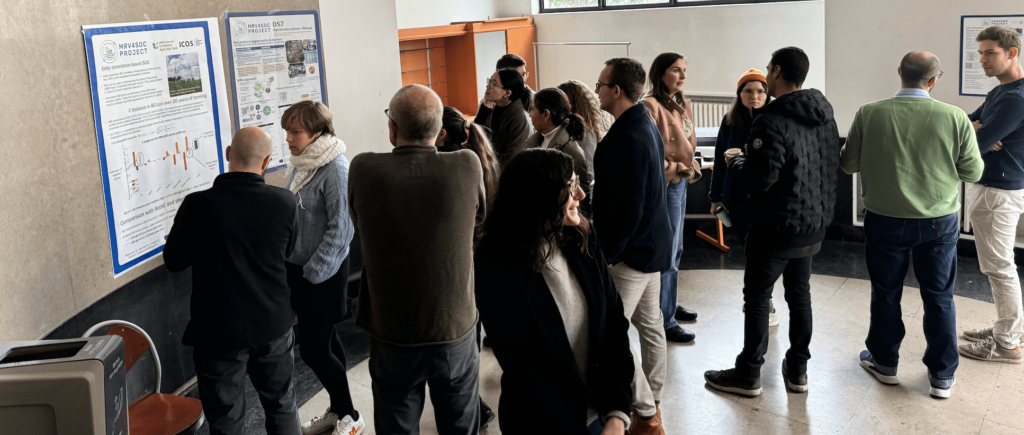
Day 2 highlighted MRV4SOC’s Demonstration Sites, where partners shared the latest developments from each of the 15 sites. Engaging discussions allowed partners to align on next steps, clarify project expectations, and tackle site-specific challenges. This session was complemented by an interactive poster display, where each demo site presented visual updates, ongoing activities, and any encountered or anticipated challenges.
An additional highlight was the introduction of the ORCHIDEE model, part of the IPSL (Institut Pierre Simon Laplace) Earth System Model. This tool aims to unify data, methods, and results across demo sites, and to assess the value of remote sensing data for accurate and cost-effective monitoring. The ORCHIDEE model represents a critical step in harmonizing our approach to data collection and analysis, providing a powerful means to enhance project consistency and efficiency.
Looking Ahead with a Unified Vision
Overall, the General Assembly served as a vital touchpoint for advancing MRV4SOC’s ambitious objectives. The event strengthened our collaborative spirit, propelling us closer to developing a robust MRV framework. We are excited to continue tracking changes across various carbon pools, estimating greenhouse gas emissions, evaluating comprehensive carbon budgets, linking carbon and nitrogen cycles, quantifying Soil Organic Carbon accumulation, and assessing both traditional and innovative carbon farming practices.
With continued collaboration, the MRV4SOC Consortium remains committed to creating actionable solutions for sustainable land management across the EU, helping meet the pressing challenges of climate change and environmental stewardship.